
Small Business Bookkeeping: Keep It Simple, Keep It Right
Small business bookkeeping doesn't have to be overwhelming. Learn the simple habits that keep your records clean, your taxes easy, and your business finances clear year-round.
6/1/20263 min read
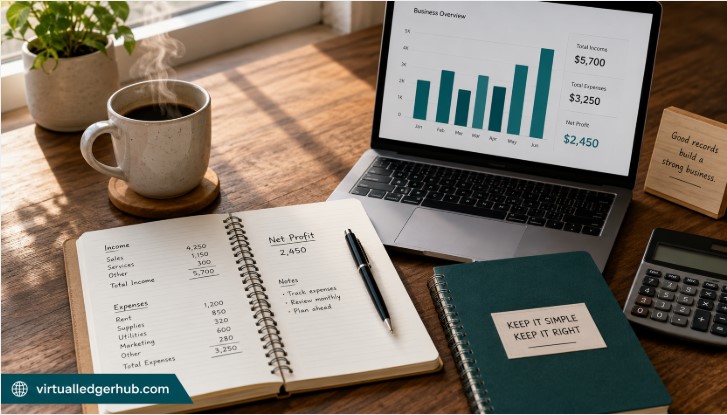
Small business bookkeeping is the one task every business owner knows they should do.
Yet this is the task put off until panic sets in.
You started your business to do the work you love. Not to stare at spreadsheets on a Sunday night, wondering if that $340 lunch was a business expense.
Bad bookkeeping doesn't announce itself. It creeps in quietly. Then tax season arrives, and suddenly you're digging through six months of bank statements trying to remember who "PMT Services" actually is.
You don't need an accounting degree to fix this. You need a system. A simple one. And starting today, not next quarter, makes all the difference.
Why Most Small Business Owners Fall Behind
It rarely starts with laziness. It starts with confidence.
Most people feel unsure about what counts as a business expense. They're nervous about getting it wrong. So they delay. The receipts pile up. The pile becomes a problem. The problem becomes dread.
The fix isn't working harder. It's building a habit so small you can't talk yourself out of it.
The Only Bookkeeping Habit That Actually Sticks
Set aside 20 minutes every Friday. That's it.
Spend that time doing three things:
1. Categorize this week's transactions. Log every payment in and every dollar out. Most banking apps and accounting tools, such as QuickBooks Online, Xero, and Wave, pull these in automatically.
2. Snap receipts before they disappear. A photo on your phone counts. Apps like Dext or Receipt Bank store them digitally.
3. Note any unusual items. Client dinner? Write who it was for. One line. Done.
Twenty minutes a week saves you eight hours at year-end. That's not an estimate; ask any bookkeeper.
A plumber earns $4,200 in a week and spends $640 on parts, fuel, and a tool repair. He logs it on Friday afternoon in under 15 minutes using Wave. Come June, his tax return takes two hours, not two weeks.
Separating Personal and Business Money (Non-Negotiable)
This is the single biggest mistake small business owners make. Mixing personal and business spending destroys clean records. It also flags you for scrutiny with the tax authorities.
Open a separate business bank account. Do it this week.
It doesn't need to be fancy. A free business checking account works. Once your money is in separate buckets, your bookkeeping becomes almost automatic. Every transaction in that account is business-related. Every transaction in your personal account isn't.
A freelance graphic designer pays her software subscriptions, client meeting coffee, and home office supplies from one shared bank account. Her accountant spends three extra hours untangling it each year at $150/hour. That's $450 to fix a $0 problem.
Cash vs. Accrual: Pick One and Stick With It
Most small business owners use cash basis accounting. You record money when it actually moves. You paid a bill today? Record it today. A client paid your invoice? Record it when the cash lands in your account.
Accrual accounting records income and expenses when they're earned or owed, not when cash changes hands. It's more accurate, but more complex.
For most freelancers, sole traders, and businesses under $500K in annual revenue, cash basis is the right call. It's simpler, and it matches how you actually experience money day to day.
Check with your accountant if you're unsure. But pick one method and apply it consistently. Switching mid-year creates real problems.
What Small Business Bookkeeping Actually Needs to Track
Keep it focused. Your records need to capture four things:
Income — every payment you receive. Invoice number, client name, amount, date.
Expenses — every dollar you spend for the business. Category matters here: travel, software, supplies, professional fees, and so on.
Assets — anything you own that has business value. Equipment, vehicles, inventory.
Liabilities — money you owe. Loans, credit card balances, outstanding supplier bills.
That's the core. Most small business accounting software handles all four automatically once you link your accounts. The job isn't building a system from scratch, it's feeding the system you choose.
When to Stop DIY and Hire Help
There's no shame in doing it yourself when you're starting out. But there's a point where DIY becomes expensive, not cheap.
Watch for these signs:
You've missed a tax deadline in the past 12 months
You're not sure if you're making a profit
You're growing fast, and cash flow feels confusing
You're bringing on your first employee
At that point, a bookkeeper, not necessarily a full accountant, is what your business needs. What they save you in penalties, missed deductions, and time usually covers their fee.
It is less of an expense and more of a business decision.
Final Words
Small business bookkeeping isn't glamorous. But it's one of the most powerful things you can do for the health of your business. When your records are clean, you know exactly where you stand. You make better decisions. Tax time stops being terrifying.
The goal isn't perfect accounting. The goal is consistent accounting. Start small: open a separate bank account this week, block 20 minutes on Friday, and pick a tool you'll actually use. One week of good habits beats one month of procrastination every time.
Services
Expert bookkeeping for small businesses and accounting firms.
Contact
Support
info@virtualledgerhub.com
© 2025. All rights reserved.